There’s a saying in the cancer community: being diagnosed with cancer is one of the worst clubs to be in but it brings you into one of the most extraordinary communities you will ever know. That became my truth in February 2022, when I was diagnosed with breast cancer. Through that experience, I met seven remarkable women whose love, honesty, and shared understanding carried me through moments that felt impossible to endure alone.
Nothing can truly prepare you for the ways cancer reshapes your life. But these women did what they could to make the path gentler, offering the wisdom passed down to them and the grace that comes from shared grief. Their words and stories became steady lights in the darkness, and I am endlessly grateful for their presence.
As time has passed, I have continued to honor the women who walk beside me, those who have endured and those who are still finding their footing. This project has grown to include previvors, survivors, and thrivers, each one a reflection of strength and resilience in its many forms.
To the women who see me, who sit with me in both the quiet and the storm, thank you. This project is dedicated to you.

JENNIFER
October 2, 2015, is the day my life changed in ways I could never imagine. My name is Jennifer Ollero, and I am a breast cancer thriver. And I am grateful.
On October 2, 2015, I got my annual mammogram. Everything seemed routine, so I wasn’t scared when they asked me to stay for an ultrasound, a standard for us dense-breast-tissue girlies. I left the appointment without giving it a second thought and happily went about my day.
A few days later I received an email that the test results were in my K-Chart. That K-Chart — a blessing and a curse. Not one to wait, I immediately opened the email expecting to read that the results were normal, but that wasn’t the case. They found a suspicious cluster in my left breast. I distinctly remember the rush of panic and nausea that pulsed through my body, followed by several panicked calls to my doctor’s office, begging to be seen right away. It took a few tries and some tears, but my doctor agreed to see me that day. The next call was to my best friend and husband, Ryan, the voice of calm and reason who I would need by my side.
For people who don’t know me, I am extremely intense, stubborn, and determined — a true Scorpio. But that first doctor’s appointment shut me down. I sat quietly as the doctor explained the next steps. I’m not sure I even heard half of what he said; I just recall my husband asking questions and pushing to get the ball rolling on what would become a barrage of biopsies, MRIs, and doctor appointments.
There was a lot of uncertainty about the surgery and treatment plan, which depended on the tumor’s pathology. This left me with plenty of time to do my own research on breast cancers and treatments, courtesy of WebMD. Not a rabbit hole I recommend going down. I spiraled for several days, causing waves of anxiety that nearly paralyzed me. But by Nov. 5, I had my answer and knew my surgical and treatment plan. I had estrogen and progesterone receptor-positive cancer and would be having a unilateral mastectomy. This meant one, I wouldn’t need the “red devil” chemotherapy and two, I wouldn’t need radiation. I felt an immediate sense of relief. It was at this point I recognized how lucky I was.
I had seven days to get ready for the first surgery. I went into autopilot, checking off my to-do list. First was telling our family. I didn’t want to upset my children or parents until I had a diagnosis and a surgical plan. I didn’t want them going down the WebMD rabbit hole. I wanted to answer their questions with certainty. And it was now time. These were the toughest conversations I have ever had.
Next came work. At the time, I worked for MSA, a Hanford contractor. They were supportive, ensuring I didn’t need to worry about anything other than my health. Financially, I was taken care of, which lifted a huge weight off my shoulders. I also spent time at the Tri-Cities Cancer Center, where the resource center connected me with post-mastectomy items I would need. They were a godsend. Who would ever think you’d need a special camisole post-surgery? I didn’t. They also walked me through the items in my Kadlec mastectomy bag, filled with tried-and-true tools for recovery: a small pillow to protect your chest, a satin ribbon to tie drain tubes to while showering, and “no-water” shampoo. Things I never would have thought of.
On Nov. 12, two days after my 44th birthday, I headed to Kadlec for the first of three surgeries. It was mastectomy day, and I was relieved to finally evict the cancer from my body. Two weeks later, the day before Thanksgiving, I was back for round two, the reconstruction phase. These were not easy procedures. It was emotionally tough to lose a part of what made me feel “womanly,” and physically tough as well. I didn’t expect to feel like someone had beat me up, but I did. I couldn’t wash my own hair. I couldn’t raise my arms. I shuffled around like a 90-year-old man. But I knew I was lucky — lucky that the right radiologist reviewed my mammogram and spotted the tiniest speck, knowing it was abnormal.
Cancer changes you in ways you can’t imagine. For me, it was adjusting to the physical and emotional changes. I had been medically thrust into menopause (the worst) and was adjusting to a silicone blob implanted in my chest. I found myself needing to connect with others who were facing similar challenges: somewhat maimed and trying to navigate life with the cancer stigma. It’s a strange feeling to have people you’ve known for years suddenly treat you differently because of the big C.
So, I looked for support groups and found Warrior Sisterhood through Facebook. Warrior Sisterhood is a program within the Tri-Cities Cancer Center, founded in 2013 by local cancer warriors to ensure women are supported at all stages of their cancer journey. This was the lifeline I was looking for. In the summer of 2016, they were having their annual picnic, so I reached out to attend. I didn’t know anyone, and I was nervous. I even made my teenage daughter come with me. But they greeted me with open arms, welcoming me like a long-lost friend. It felt like I had known them all my life. I had found my people and my new purpose. Within a few months, I joined their board of directors and became immersed in helping others navigate their new normal.
Like so many before me, I became an advocate for cancer education, prevention, treatment, recovery, and survivorship. It’s a mouthful, but so is cancer. It’s scary enough just being told you have cancer; it’s worse when you feel like you must face it alone. Unfortunately, far too many people in our community do face it alone. Since my recovery, it has been my mission to share my experience with others to alleviate some of the fear. I am no expert, and everyone’s cancer journey is unique, but there is something reassuring about connecting with someone who has been through it. Being able to answer questions and guide people to resources they may not have known about is rewarding in its own small way.
Today I serve on the Tri-Cities Cancer Center Foundation Board, where I advocate for patient resources, state-of-the-art medical technology, and ensuring patients can receive the necessary care here at home, which is increasingly important given financial uncertainty in the medical industry.
My cancer, while inconvenient, was an unexpected gift. It taught me not to take life for granted, to be an advocate for my own health, and the importance of paying it forward. Cancer also brought some of the most amazing people into my life — people who have become like family. And for that, I am grateful.
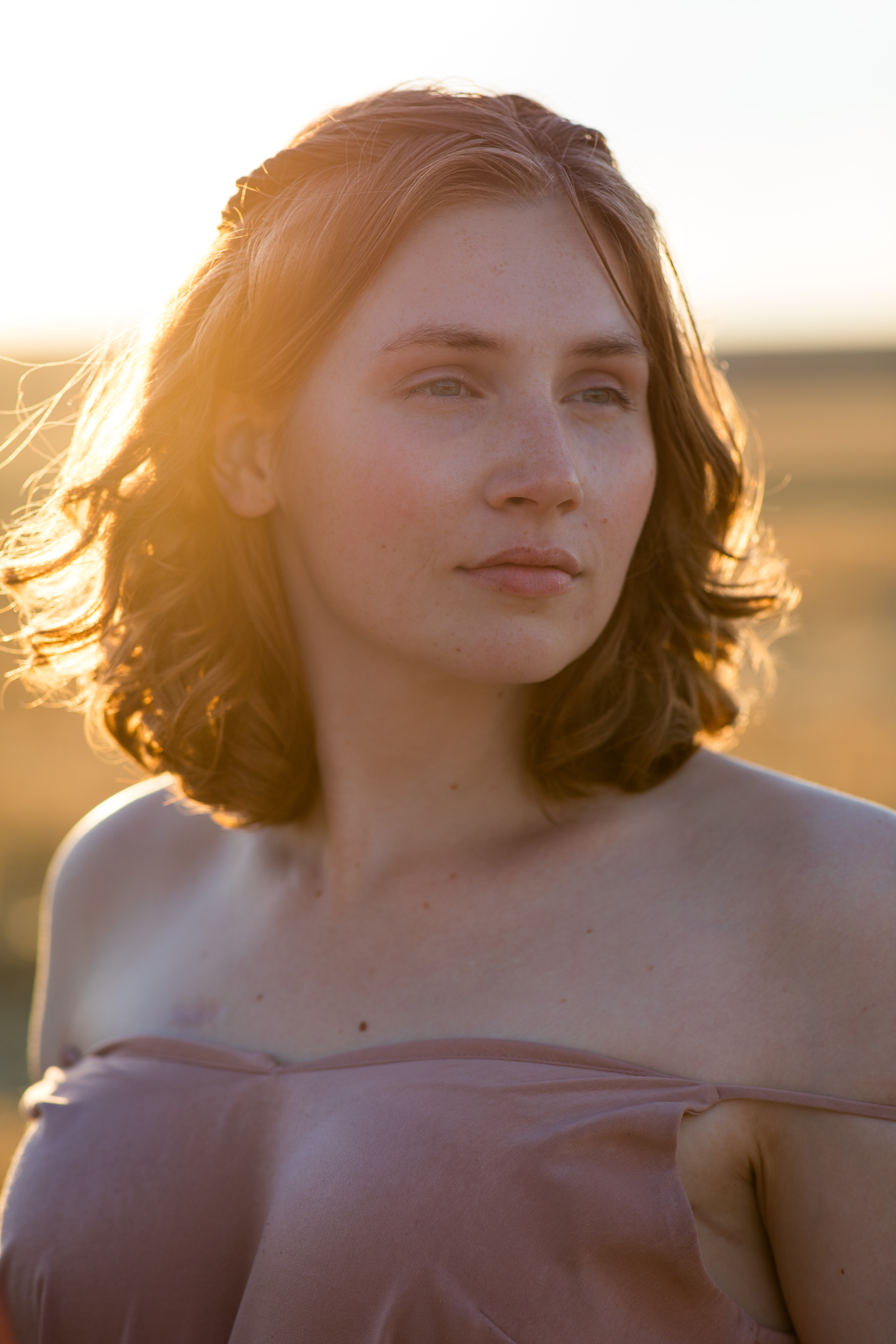
GRACE
Breasts,
Once the soft curves of rolling hills,
Emerald and blossoming,
Abounding with streams.
Sustainers of life, sacred springs.
In losing you,
I lost a piece of me –
My femininity,
My identity;
Carved away with the tissue.
My chest,
Now a landscape of loss.
Once a warm embrace,
Soft with life,
Now replaced by
Windswept dunes,
Scorched and scarred,
Rivers run dry.
You have taught me that beauty is not in what we have,
But in what we endure.
I wear it in my scars –
Marks of courage and strength,
Each one tells of the battles fought,
The victories claimed.
Although my contours have changed,
Firmly I stand – imperfect, beautiful, whole.
Womb,
My secret garden,
Once a haven for blooming life,
Brimming with hope.
I long for the days before you were poisoned-
Polluted by rivers of chemo.
Now the gate remains locked.
I have forsaken you –
The weight of my grief, crushing. Forgive me though-
For I cannot handle more hurt.
Fertility, sacrificed for my survival.
Now a chasm has carved way,
Yawning and empty and echoing.
There is an aching stillness
Where once-fertile ground
Is now devoid of life.
But in your bareness, I find wholeness.
For you remind me that worth does not flow from my body,
But through my soul.
You have taught me that womanhood is not defined by motherhood,
But by the depths of my heart.
Oh, Body of mine,
A woman, merely budding.
Life was supposed to be about beginnings,
Not about battles,
And you betrayed me.
But too often I have cursed you.
So now, I honor you:
Not for what was taken, but for all that remains –
For unyielding strength,
For redefined womanhood.
My beautiful body,
You are a battlefield,
And you are sanctuary.
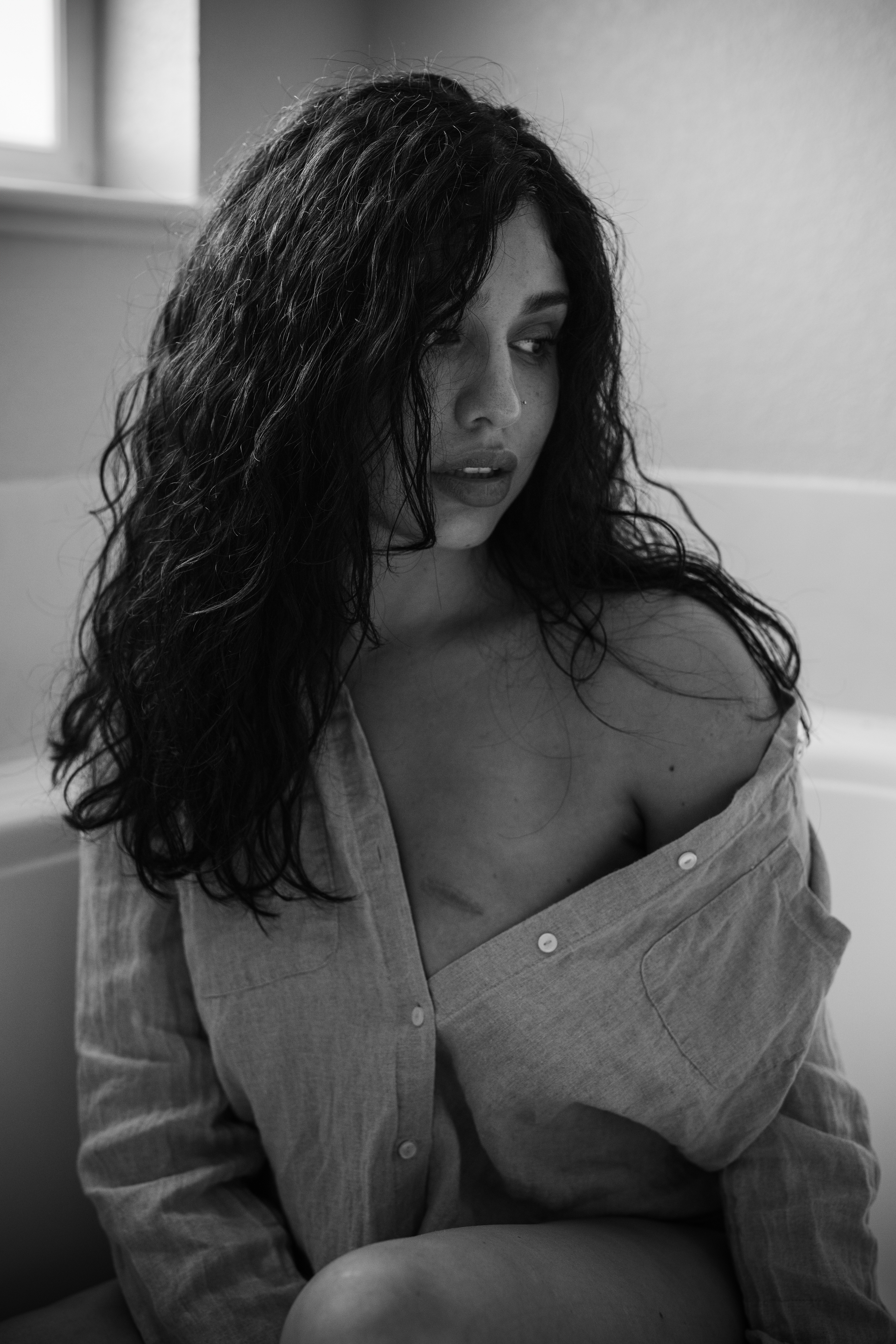
ALMA
Cancer was and is…
Cancer was:
The unknown the night I felt the lump.
The waiting period between the prognosis to the final diagnosis.
Saying it out loud for the first time.
It was:
That hug from the person I love most, thank you mom.
The ongoing opinions, appointments, and questions that I wanted all gone.
The strength I didn’t want to know I have.
It was:
The goodbyes of those I thought would walk this journey by my side.
The support I received from those I never would have thought.
The faith in my Lord and Savior who gave death a new perspective.
Cancer was all that and now is:
Putting off IVF for 5 more years. Ouch, it still hurts.
Reading that book, at that center, while I wait on that monthly dose.
Being patient with my mind and body when the side effects kick in.
It is:
Falling to my knees in prayer when dark thoughts creep in.
Viewing the world through the lens of endless gratitude and love.
Starting a bucket list and crossing items off.
It is:
Wishing I had a hand to hold and someone to say, “Babe, it’s all gonna be okay.”
Appreciating these new scars for what they are, a reminder of how blessed I am to see another day.
It is:
Living for today.
Cancer was and is for me:
Praying that I one day get to say, “I once had breast cancer, but now I am cancer free.”
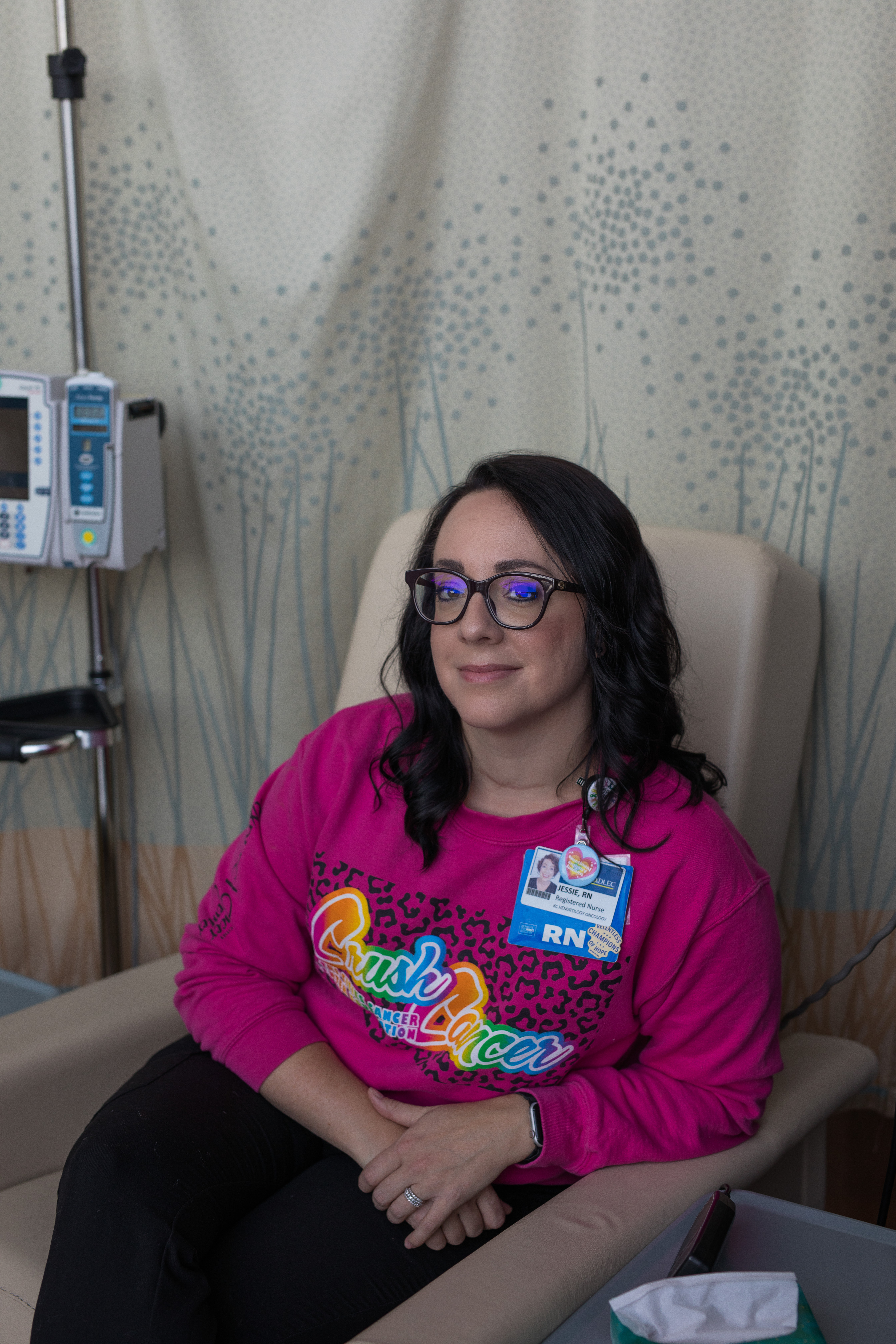
JESSIE
You never really know where to start when asked to talk about your breast cancer journey. When I hear the word “journey,” often something with a beautiful connotation comes to mind. I don’t think most would look at cancer and think of anything beautiful, and I would say before my journey I would have agreed. Although there has been no shortage of pain, fear, anger, tears, sadness and confusion, the last almost 4 years have also been nothing short of something beautiful.
In October 2019, my son decided abruptly he was done breastfeeding. I was surprised but didn’t think much about it. About 2 weeks later I felt a lump, thinking it was likely a clogged milk duct. I brushed it off, trying to pump here and there to see if that would help. There was never any pain or other concerning symptom. About a month later I realized it seemed to be getting noticeably bigger and made an appointment with my OBGYN. After an ultrasound which turned immediately into a mammogram, a breast MRI, and two biopsies, I was diagnosed at the age of 31 with stage III invasive ductal carcinoma and HER2+.
Having been a nurse for almost 10 years at the time, you would think I would have at least a small frame of reference with cancer. The only frame of reference I had, apart from what is shown on TV and in movies, was the small amount of clinical time I had on the oncology floor as a nursing student. At that time, I told myself I would NEVER want to be a part of a world seemingly full of pain, sorrow and loss.
When I began consult after consult, appointment after appointment, and then eventually treatment, I found myself in THAT world. Even having a decade of medical background, I had so many questions, anxieties, and fears. I needed a connection to tether me to something tangible. I needed something that made me feel grounded and safe, like the plan in place for my health had hope of success and a way to give me more time here on this earth with my family.
I found exactly what I needed at the Tri-Cities Cancer Center. I found solace, compassion, strength and literal earthly angels to lift me up when I felt like I had no control over a single thing in my life. I found people who cared for me as a person and made me feel like I wasn’t just another patient to push through a busy schedule. I found a family and team of the most generous, kind, loving people, the majority of which have either had a loved one go through treatment or have personally gone through cancer treatment. I found camaraderie with those who had walked this path before and stood in front of me healthy and well, having hope that could be me too.
I completed 6 rounds of chemotherapy, a double mastectomy, 28 rounds of radiation, and a full year of targeted therapy infusions to give me a chance at life again. I remember right before finishing treatment I asked my husband, “How do I repay all the kindness and support that has been shown to me?” He simply replied, “You don’t repay kindness. You pay it forward.” And that’s when I knew what I needed to do.
Roughly a year later, I landed a job at the cancer center as an infusion nurse. Having been there now about a year and a half, I can confidently say that being able to be a part of and supporting others on one of the hardest journeys of their life has been such a gift to me. It has been a way to help me heal and claim back some of the things I feel like I lost in my own journey. It has given me the opportunity to pay forward the care that I received and so desperately needed when I felt like I had no tether to any sense of control or outcome of my own life. And although I know I get way more out of it than I give, I always felt if I could make even ONE person’s journey a little lighter, I will feel like I am paying forward what was so generously gifted to me.
Roughly a year later, I landed a job at the cancer center as an infusion nurse. Having been there now about a year and a half, I can confidently say that being able to be a part of and supporting others on one of the hardest journeys of their life has been such a gift to me. It has been a way to help me heal and claim back some of the things I feel like I lost in my own journey. It has given me the opportunity to pay forward the care that I received and so desperately needed when I felt like I had no tether to any sense of control or outcome of my own life. And although I know I get way more out of it than I give, I always felt if I could make even ONE person’s journey a little lighter, I will feel like I am paying forward what was so generously gifted to me.

ASHLEY
The Final Chapter
PART I
Cancer takes a lot, but I think most would agree that it takes time. It steals time, yet simultaneously slows it down too. It’s an odd phenomenon, but in my experience, going through the phases of diagnosis, treatment, and recovery; varied from crawling, to sometimes seemingly going backwards, to even passing in a blink, all in the same memory. I am just over 3 years out from my diagnosis, and I am not quite sure where the time went.
One thing I’ve known since the beginning of time, is that I wanted to be a mom. In January 2020, I stopped birth control in hopes of conceiving. With that in mind, you might imagine how my world was really flipped upside down when 10 months later we were thrown the curveball that is cancer. I thought it was the year I’d become a parent, not die for goodness sakes. —
In October 2020, one of the first questions my nurse navigator asked me was, “Are you interested in fertility preservation?” Without even knowing what that really meant, I eagerly replied, “YES.” From there, I was rushed to connect with Seattle Reproductive Medicine (SRM), who quickly got me on a treatment plan for a follicle stimulation and egg retrieval cycle.
Going through treatment while everyone around us seemed to be starting a family was difficult to say the least. When friends became pregnant, I was truly so happy for them. I love children and I hope everyone who wants to experience that gift can do so. Still, I struggled to sort out the unanswerable questions, like “Why not me?” and “Will I ever get to be a mom?” I told Austin (who’s fond of a good analogy), “It’s like watching everyone around you get called up to the Big Leagues, while you’re told you may not even get a chance to try out.”
Eventually, I developed a thicker skin, and learned that I had to put the idea of becoming a parent completely out of my mind to survive cancer treatment. Starting a family wasn’t something we could even think about for at least 2-3 years. So, I let that dream go for the time being and focused on the road ahead. There was no way to predict what life after treatment looked like, and we had a long way to go.
PART II
In Spring of 2022, about six months following my last treatment, my oncologist cleared us to try and conceive. Again, I stopped birth control and we got to it. To be proactive, we also re-established care with Seattle Reproductive. Per SRM, everything was perfect! On paper, there was no reason why we could not conceive naturally. Many women conceive after cancer treatment, so we kept trying.
Eventually, another year passed, and there was still no baby. In one pivotal appointment, I recall our doctor asking, “What’s stopping you from thawing your eggs?” I replied, “I guess I don’t have a reason. I had just hoped that something would come easy for us.” Didn’t we deserve that? After all, it’s not often couples battle cancer within their first 5 years of marriage. What’s more, it is seemingly impossible to experience something so profound at such a young age, and simply jump back into “normal life” afterwards. Adolescent and young adult (AYA) cancer patients are faced with life lessons that many don’t experience until much later, if ever. Cancer changes your path and your priorities.
PART III
Admittedly, we kind of jumped from one type of treatment to the next (i.e. from fertility treatment to cancer treatment, and back to fertility treatment again). But, as I mentioned, I was focused on making up for lost time. Cancer took years from us, and I wanted to take back control and see through our vision to start a family. By the time of our scheduled embryo transfer, I had somewhat given up hope. Still, deep down, I believed it would happen eventually. My heart told me I was meant to be a mom, and I knew reproductive technology was capable of great feats, but everything seemed so distant. Maybe that was a bit of self-preservation because I had certainly convinced myself that the first transfer would not stick. A 50% success rate is not entirely reassuring, and we had a history of the odds stacking against us.
When I tested at home two days before my scheduled bloodwork, my intention was to set expectations for the lab results and better prepare myself for the outcome. Statistically, by 7 days post 5-day embryo transfer, a home pregnancy test could pick up trace amounts of HCG (even though our doctor advised us to wait for the draw). All that to say, I was genuinely shocked to see that very visible, second pink line! I audibly gasped, threw my hand to my mouth, and shakily picked up the stick to get a closer look. I didn’t cry. All I could do was smile. And of course, I couldn’t wait for Austin to wake up!
The Epilogue
From my current perspective, I could never have imagined that cancer would lead me to motherhood. Without the Livestrong Foundation and the valiant fertility preservation methods of SRM, I am not sure that we’d be happily pregnant right now otherwise. This in part is why I feel a sense of appreciation towards the experiences and lessons cancer brought me and how it prepared me for this parallel journey.
I used to think that it was not a matter of IF the cancer would return, but WHEN. Some days I still feel this way. But as time passes as it inevitably does, more days than not, cancer now feels like a strange dream and a distant twilight zone that’s softly engrained into the background of our lives. I look at pictures of my frail, bald self, and I don’t recognize her anymore. Nevertheless, I also vividly remember the days that bald girl didn’t recognize the girl with long, blonde hair. That blonde, pre-cancer girl has disappeared, and a more strong, wise, and resilient version has grown in her place.
It’s now October 2023, and the idea of skipping my annual breast imaging is a bit unsettling. Instead, this morning we watched our baby move in 4D through similar technology, and all feels right in the world. I don’t live in fear of the day my cancer might return. I do, however, let those thoughts approach, acknowledge them, and continue with my day. Things happen every so often and I am reminded of past seasons. But for now, I sit by the fireplace with my family, breathe in the crisp fall air, and anxiously await the day we will feel our baby boy move for the first time. Life is truly too short to not take every opportunity for granted, and that includes motherhood. I will forever be grateful of the role that cancer played in making me “mom.”

KRISTINA
Cancer is like a cancer
Cancer is like a cancer.
It starts in one spot and spreads, not just through your body but through your life. It hijacks your cells, your plans, your identity.
It takes the people you love. It took my people: My dad, my uncle, my aunt, my in-laws, my friend Libby.
Cancer comes in all kinds, in all stages. Within my circle it’s been breast, colon, thyroid, brain, kidney, ovarian, leukemia, sarcoma, skin, and some I’d never heard of before joining the Cancerverse: leptomeningeal, synovial sarcoma, neuroendocrine, Li-Fraumeni Syndrome, which isn’t cancer but a genetic mutation that comes with a high risk of getting it.
Cancer marches up and down both sides of my family tree, leaving diseased body parts and people in its wake. My own body harbors a gene passed down through generations that increases my risk and eventually that risk became my reality.
A cancer diagnosis is undeniably life-altering, but it is also life-affirming and brings a sharp focus to the things that matter most. I’ve met extraordinary people whose paths I never would have crossed otherwise.
When I started chemo, my husband and three friends shaved their heads in solidarity. Others showed up in all the quiet, generous ways that speak volumes: bringing meals, sending cards, care packages, texts and funny memes, watching our daughters so I could rest, or simply sitting beside me during treatment. They surrounded me with love exactly when I needed it most. Through the hardest days, my husband, family and friends reminded me – not just in words, but in action – how deeply I am loved. That kind of love changes you forever.
My story
My cancer story isn’t your cancer story.
But in some ways, it is every survivor’s story – an invisible thread connecting each of us: the same fear, dread, despair, anger, hope, conviction.
An MRI found my breast cancer which had already spread to my lymph nodes – just two months after an “all clear” and “everything looks good” mammogram showed nothing.
I was 43.
My cancer battle plan included multiple surgeries, nearly five months of chemotherapy and 33 blasts of targeted radiation to my chest wall.
To put this into perspective, the dosage was about 100,000 times more radiation than what a typical human absorbs in a lifetime. My left chest wall may now qualify for its own Marvel origin story.
During my first visit with my surgeon, he dropped a bead into my palm from a tackle box to illustrate my tumor size – it was a sinister pearl.
My best cancer friend Teresa’s was the size of a golf ball. We joked a lot about hers being bigger than mine during our treatment. Gallows humor and trauma bonding get you through the darkest days.
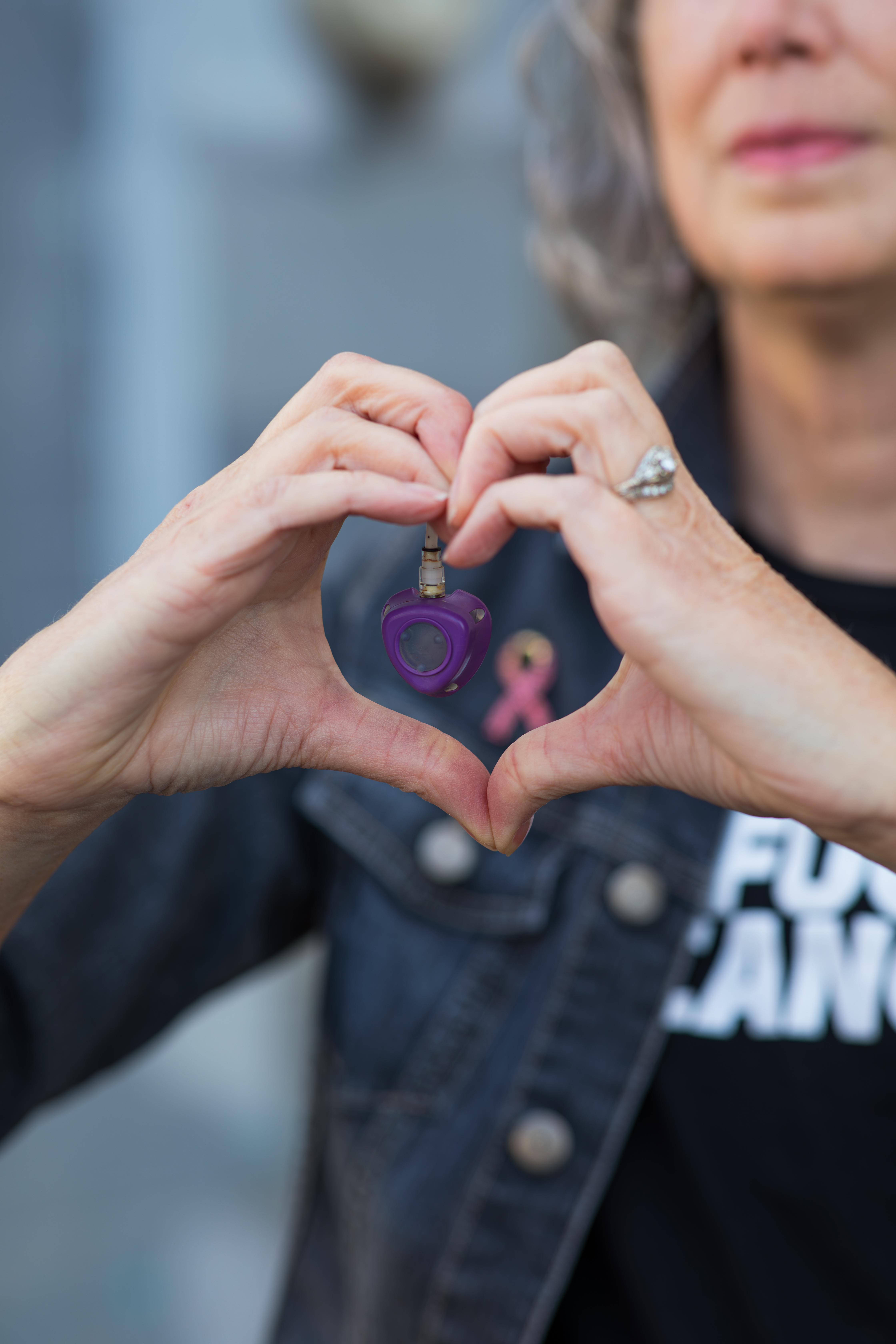
A port in the storm
A purple mediport used to be buried under my skin near my right collarbone. Its tube slipped into one of my central veins to become a superhighway for the chemo drugs to enter my bloodstream – the drugs that saved my life, the drugs I dreaded.
It stuck out like a hard button beneath my thin skin. When my daughters, ages 6 and 8, would barrel into my arms for a hug, they would inevitably hit it, sending white-hot pain in all directions.
When my surgeon removed the port a year later, I brought along Misty and Andrea, fellow breast cancer survivors. The snaking of the tube as it slithered out of my body was among the weirdest sensations I’ve experienced – a tapeworm being pulled out from within. I asked to keep the port, the doc bagged it, and I carried it out of the clinic like a badge of honor from my war years. Then my friends and I went out for drinks and cupcakes.
The fight’s aftermath
You’re told to fight and you do – and then everyone calls you a survivor.
You smile. You celebrate. You post the victory on social media. You think you are done.
But no one tells you that surviving cancer can feel like its own kind of cancer.
Because it doesn’t end when the treatment does. It’s just where a different kind of struggle begins.
Post-cancer PTSD is real. Every headache is a brain tumor. Every phantom pain is suspicious.
Every scan, lab and oncology visit brings anxiety.
Your body, once familiar, is now untrustworthy because it betrayed you.
Numbness invades places that once felt sensation. Scars and radiation tattoos mark your post-cancer body. Fatigue seeps into bones, then post-cancer drugs make them brittle.
The body that once felt like yours no longer responds the way it used to. There’s grief in that.
You tell yourself this is healing, but this, too, becomes a kind of mutation because it’s not a return to before.
Survivor guilt metastasizes into an impossible question: Why did I survive and not them? Each loss is another scar to carry.
Milestones
Survival spreads into days, months, weeks, years, milestones – if you’re lucky.
This October marks my 11th year post-diagnosis.
The most important advice I can give anyone facing down this disease is to be your own best advocate.
If something doesn’t feel right in your body, keep pushing to get the tests to figure out what’s wrong. Trust your instincts and your doctor – or find a new one you can trust.
Surviving cancer also means carrying the tattered map to help others who come behind you through it, a most sacred duty.
You put their chemo dates in your calendar. You show up on chemo day. You check in the next day. You hold their hand during a biopsy. You rally them when they need it. You listen. You make them laugh. You validate their fears.
You bear witness because sometimes the only gift you can give is the permission to feel the fear and to show them there is life on the other side. And it’s not the same life but they will figure this out on their own.
People expect you to be grateful (you are). To be positive (you are). To move on (you try to).
You learn to lean harder into gratitude, to embrace each day, to stop postponing your own life, to let go of the things that don’t matter because it’s more clear what those things are.
But here’s the truth: Survivorship is a long-term side effect of cancer, and you must continue to carry it because cancer is like a cancer, and you don’t have any other choice.

ABBEY
A routine obligation…
It’s spring of 2018 and I’m 39 years old. In hindsight I would say I didn’t have a care in the world; this wasn’t really true, as I had a demanding job and a son getting ready for kindergarten in the fall. At my gynecological check up my doctor mentions my age and says she’ll put in the order for my first mammogram in the fall when I turn 40. I knew the time was coming, I’m glad it will be in the works, and I’ll worry about it later.
To my surprise I get a call to schedule my mammogram just a few weeks later. I don’t bother mentioning that they’ve called six months early. I figure it’s easier to just go ahead and get it done rather than have to remember to call later in the year. Soon after, I’m in a weird cape thing smushed against a machine. I’ve had breast exams before, but this was a new experience. A necessary evil I figure. At the end of the scan the technician mentions not to be surprised if they called me back. Turns out I have dense breasts (who knew!) and it helps to get more images to establish a baseline or something. Sure, I figure, whatever. I know now she was giving me a clue in a puzzle that would unravel over the next several months.
I have a choice to make…
I do get called for another scan and some internal instinct kicks in. Even though I was prepared by the comment by the earlier tech, I’m a little worried and I bring my husband, Ian, to the second scan. The process is the same as the first: same weird cape/gown thing, same smooshing and pulling at the machine, and maneuvering by body in weird and uncomfortable ways to get the images they want. Then they bring me back to the little changing room where my husband is waiting and they let me know the radiologist will be in to talk to me. “Okay, this is interesting,” I think. After a while he comes in and kneels in front of me as I’m seated on the little couch and goes over the scans. He’s using medical terms I don’t really get; I can see he’s trying to boil it down for me and I do my best to follow along. Turns out there is something there. They aren’t sure what it is. There’s no lump that I can feel, just what I understand to be bad tissue at the back of my breast. “Huh, that’s weird,” I think. He talks for a long time, I’m thinking he’s giving us (me) a lot of attention. He finishes by saying in his estimation there is a 10% chance that this is something bad (cancer.) I have two options: I can go for a breast biopsy or I can wait six months and get another mammogram. Seems it’s likely to not be a big deal, but better safe than sorry, right? I look at my husband and decide on a biopsy. “That doesn’t sound fun,” I think.
I was thinking about Justin Timberlake…
Ian comes with me to the biopsy. I don’t know exactly what I’m in for, but I figure some support would be nice and maybe we can go out for lunch after. They bring us to a room with a small sitting area outside of a tall machine and hand me another cape/gown thing. There are two nurses and the radiologist. “Lots of activity,” I think. They lead me to a chair that brings my chest close to a machine and push and press and adjust so that the back of the chair is firmly keeping me pressed against the machine. The doctor says there is going to be a popping noise, they are going to put the needle in, then take an x-ray to make sure it’s in the right place, and finally take the sample. “Okay,” I think. One of the nurses comes to sit next to me, takes my hand, and starts chatting. “This is a lot of personal attention,” I say to myself. She’s chatting away, telling me I’m doing great. The popping sound comes with a stinging pain, even numbed by the lidocaine. The process repeats: popping, handholding, everyone stepping out during the x-ray, rinse and repeat. I can’t really feel it, but something is happening. I’m getting warm. The nurse is trying to distract me. We were talking about music. Then she’s saying “stay with me” and I can feel the curtains falling over my eyes. Next thing I know I’m laying down on a bed a few feet from the machine. The first thing I said was, “I was thinking about Justin Timberlake.” Lesson learned, for me at least, they can numb the pain, but my body still responds. And it can only take so much before it’s done.
So many tests…
The biopsy showed cancer. When they called me in for the results, the doctor talked for a long time and I had trouble following, but he said something about pre-cancer. I tried to recap the conversation and said, “So, I have pre-cancer.” And I can tell he wishes he didn’t have to say it, but he says no, you have stage 1 cancer. I’m stunned. Floored. Silenced. All I wanted to do was escape from this news and pretend it wasn’t true. I told Ian I wanted to pick our son up from daycare and go see whatever movie was playing. The next weekend we went on a road trip out to the Puget Sound. I waited to tell my family; I couldn’t quite process it. As I went through tests and met with a surgeon and an oncologist, had MRI’s and other scans done, I had trouble making sense of what this meant. Is it a big deal? How can it not be a big deal? It’s cancer. But it’s stage 1? Maybe this is not a big deal. It’s very treatable. What does treatable mean? Is this going to change my lifespan? Why am I suddenly so tired? Is it because of this cancerous tissue inside me? Is it the stress? How much should I be freaking out? All I could do was either obsess about it or shut down.
Through the tunnel and beyond…
In September I had a lumpectomy. A month later, I completed three weeks of daily radiation treatments. The surprise of that experience is the three blue dots now tattooed below my breasts to help align the radiation machine. One of the last few radiation treatments was on my 40th birthday. It was not the celebration I’d planned, but I was starting to see the light at the end of the tunnel: a tunnel that had twists I didn’t expect and a tunnel that would lead to a path I never expected with future MRI’s and mammograms every six months, reminding me that this could be lurking to challenge me again. But it also reminded me not to squander anything. Time, energy, love, fun. I had faced a challenge. I had amazing support. I had terrific care. I joined a new community of survivors. In addition to a new resolve to enjoy and appreciate my own experience, I also gained the knowledge and experience to help others. Nothing makes me happier than when someone tells me they scheduled their mammo. I’ve had the unfortunate opportunity to support friends who also had to face breast cancer. These are gifts I never asked for, but one that I have learned to appreciate and one that’s big enough to share.

MISTY
“At least you got a free boob job out of it!”
A well-meaning friend said these words to me just a few months ago. I had mentioned that I was diagnosed with breast cancer over a decade ago and had a double mastectomy, chemotherapy and reconstruction surgery. I know my friend was trying to focus on the positive, and I gave them a smile before saying, “Yeah, but a lot of people think reconstruction is like a regular boob job, when it is not.” I went on to explain the reconstruction process and my friend was taken aback.
I admit that I also most likely said and thought a “free boob job” was a perk breast cancer patients could look forward to. I probably even thought that when I was initially diagnosed with breast cancer at the age of 34. The beginning phase of being diagnosed and meeting with doctors about treatment options was a terrifying blur for me. I just wanted to live. I met my surgeon for the initial consultation and immediately asked, “Can you just take both of my boobs? I don’t want to spend the rest of my life worrying about finding another tumor.”
Surgery and chemo were incredibly painful, but I was confident that my choices were my best chance at living to see my kids grow up. After several months of treatment, I found myself boob-less, hair-less and feeling like a walk around the block might as well be climbing Mount Everest. I didn’t feel human, much less feminine. But I didn’t care. I was going to live.
Several months after my last treatment, I started thinking about reconstruction surgery. I was feeling better, my hair was growing back, and I was only 35. After a year of looking and feeling like an alien, I wanted to look “normal” again. A lot of people (including women) do not realize that most dresses/shirts/tops in the women’s section are made specifically for people with breasts. The clothes look weird when you don’t have them. Like you are a 4-year-old playing dress up in your mother’s clothing.
I decided to do reconstruction surgery with implants. I don’t think I would make that decision again. I went through a process of “expanding” my chest muscle and skin, to make room for the implants. It was so painful that I would have a friend drive so I could down a few shots of vodka before heading into the office to have the doctor inject more saline to expand the area behind my chest muscles. I also had several additional surgeries after the final implants were placed because my right implant would not anchor and would slide down my body. The surgeon finally had to use cadaver material to secure the implant in place.
The end results don’t really look like boobs with my shirt off. I feel like the only similarities my reconstructed breasts have with my natural ones are that they are round and in the same general location. There is rippling, there are no nipples, they are hard, and I can usually only feel them when it gets cold outside because they are freezing. My clothes do fit better, but I frequently find myself asking, “Was it worth it?” Every time I had surgery, I was jeopardizing my life, and I spent several weeks in pain afterwards. For what? To look better in clothes?
Reconstruction is a personal choice. I wish the public would realize this is not a typical boob job. Instead of being a perk at the end of fighting breast cancer, it is another set of doctors, hospitals, scars and pain. The end results frequently disappoint and are a far cry from the boobs that almost killed you.

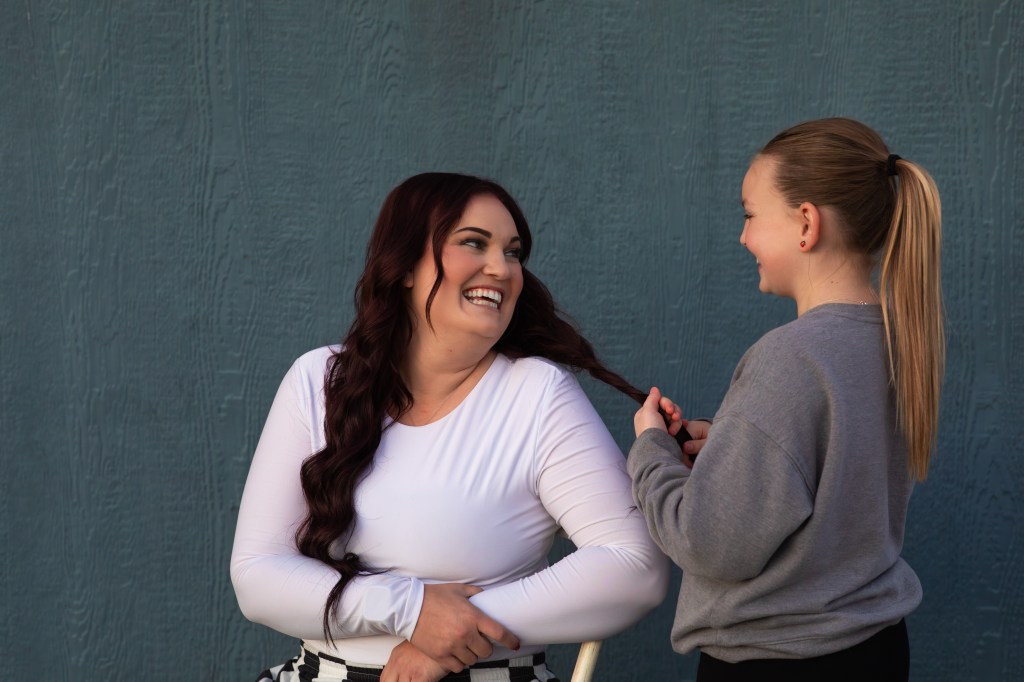
TIFFANY
“Mom, I can’t catch your cancer,” my son, who was ten years old at the time, said to me one evening after a counseling session at the cancer center. To this day it still kind of makes me giggle, but when I think about it, I can see why he would have thought that.
I used to ask my kids to wash their hands as soon as they came home from school to try to keep my house as sterile as possible so I wouldn’t get sick. I was a single mother of three in a career that is paid by commission only, undergoing chemotherapy, radiation, a single mastectomy, and reconstruction. The fear of what was going to happen with our livelihood and the well-being of my children was fed by the need to survive breast cancer.
My cancer journey started with my first mammogram at 40 years old. It was a nightmare and emotional rollercoaster of tears and anger and feeling the “Why me?” I never smoked, rarely drank, had no family history, and took care of my body. I went to the doctor regularly, had yearly exams, and did self-breast exams. I found myself surrendering and asking the lord, “Help walk me through this journey.”
I remember the surgeon telling me to get my power-of-attorney and living will prepared in the same breath as she told me she would see me in two weeks for a mastectomy. Within a month of being diagnosed, I found myself in the operating room scared to death, laying there alone with tears running down my face. It is one thing when you go into surgery and come out with a scar; it’s another thing when you go in and come out missing a body part.
I can still remember the first glance at the large scars on my chest, my first chemo infusion, and when my hair fell out in clumps like it was yesterday. There was so much fear and pain in the unknown of what I was going to have to endure next. I was constantly worried about how my children were watching and not fully understanding what was happening.
All through treatment I worked from home and went into the office when I was able. There were mornings that I woke up and would go to the bathroom only to have to lay down and wait for my body to adjust before showering and then lay down once more before I could finish getting ready. I just yearned to feel normal and to do the things I once was able to do. I yearned to support my kids, do work and family life, heck even clean my house and mow my lawn! It was so difficult for me, a person that was once so independent, to have to ask for help and rely on other people to do things for me.
The strength and inner personal courage one has to find during a cancer diagnosis is overwhelming. However, this journey brought people into my life and friends stepped up more than I ever could have imagined or hoped for. The outpouring of love and help I received was humbling. It is a path in life that no one can explain, one that you don’t wish on your worst enemy, and yet one that has molded me into who I am today.
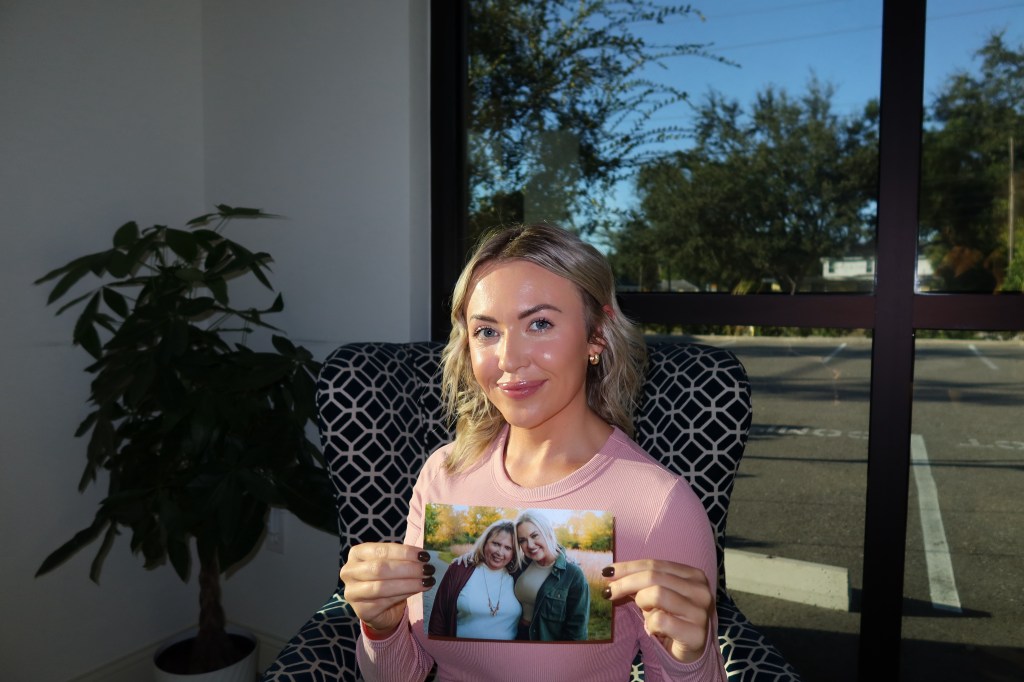
BURGANDY
Cancer and COVID: two words that don’t go together, but in my case, they do. The day I was diagnosed, my city, along with the entire world, was shutting down.
The last time I was able to have someone with me at an appointment was the day I was told I had breast cancer. COVID took away my ability to have a support system during appointments, treatments, and surgeries. It also meant I couldn’t have my family support me at home. Family and friends couldn’t visit for fear of me getting sick.
Chemo took away my energy, but it gave me something new: the nurses, a support system I never knew I needed. The nurses were the heart and soul of my experience. They made sure I had everything I needed and explained every detail, even if they had to go over it multiple times. Being so young and inexperienced, I had no idea what I was doing, but the nurses scooped me up under their wings. They cried with me, hugged me, supported me. They became family.
But bigger than COVID was my cancer. While hearing the word “cancer” is terrifying, getting cancer is something I will always be grateful for. Cancer showed me more about myself than I ever knew. Doing appointments, treatments, and surgeries alone was scarier than the cancer itself. I had always felt safer with someone by my side, but during that time, I didn’t have that comfort. It wasn’t ideal, but it allowed me to gain the confidence to see that I could face hard things on my own.
I used to think beauty was the hair on my head. When it was gone, I realized beauty was so much more than that. Beauty was being able to look in the mirror each step of the way and see that I was fighting, thriving, and surviving.
Besides hearing the words “You have cancer,” shaving my head was by far the hardest moment I’ve faced. I loved my hair! I loved styling it, curling it, straightening it, crimping it, changing it from blonde to black to pink. My hair gave me confidence. I thought when I lost it, I wouldn’t be beautiful anymore.
But the first thing my daughter said to me after she finished shaving my head was, “Mommy, you are so beautiful.” After struggling for about a week with my new reality, I realized she was right. I was beautiful, just in a different way. Instead of hiding behind my hair to feel confident, I learned that beauty comes from within, from how I carry myself and how I face whatever comes my way.
While cancer took so much from me, it also gave me courage, strength, self-confidence, and a second chance. Most of all, it gave me the opportunity to be a role model for my kids.
Every treatment day, they would come and sit by the window to FaceTime me. We’d talk about how mommy was getting chemo and whether it hurt. Every time they came, it made me smile. The nurses would wave to them through the window, and even though my kids couldn’t be by my side, they still showed up for as long as their little minds could handle it.
While I hope to be a role model for my kids—to show them to never let anything bring them down and to always stand tall no matter the challenges—I also hope to be a role model for others fighting the same fight. I want people to look at me and see the strength, the heart, and the hope, and to know they can come to me for support and advice.
NICOLE
It started with a pattern, a painful one. First, my mother was diagnosed with stage IV ovarian cancer. Then, her sister, my aunt, was diagnosed with breast cancer. We clung to each other through fear, all the treatments, and the unknown that lay ahead. But deep down, something didn’t feel random. It felt genetic.
Still, we didn’t rush into genetic testing. In fact, my mother was at first apprehensive about getting tested for a BRCA gene mutation. The BRCA1 and BRCA2 genes are tumor suppressor genes that play a crucial role in repairing DNA damage and preventing cancer. Mutations in these genes can increase the risk of developing certain types of cancer, particularly breast and ovarian cancer. Whether it was fear of what she might discover, uncertainty about what it would mean for her already difficult health journey, or worry about how it could affect me, I’m not sure. Maybe it was all of it. There was this unspoken weight: If she was a carrier, what would that mean for me?
Eventually, though, my mother found the strength to get tested. And when she did, we got the confirmation: she was BRCA1 mutation positive.
Her decision to test was the beginning of a new chapter for both of us. That single act, despite her hesitation, gave me the information I needed to take charge of my own health. And in many ways, it changed the entire trajectory of my life.
Even with that information in hand, I held off on acting. I was still clinging to some quiet hope that maybe I wouldn’t carry the gene. Maybe it had chosen to skip me. But when my cousin, just a few years older than me, was diagnosed with breast cancer, everything shifted.
She wasn’t part of an older generation. She was someone whose life looked a lot like mine, whose diagnosis felt eerily close to home. Her cancer wasn’t just a statistic; it was a mirror. Her strength and vulnerability lit something inside me. I knew I couldn’t wait any longer.
The process was simple: a blood test and a consultation. But the emotional weight was immense. I remember the tension building in my chest with every passing day waiting for results. When the results came back positive, I felt a strange mix of clarity, grief, and urgency.
Clarity, because I finally had an answer. Grief, because knowing meant losing a sense of normalcy. Urgency, because I felt compelled to act before cancer made the first move.
I began researching. I met with specialists, asked questions, and wrestled back and forth with what this would mean for my future. My body? My family? My identity? But I kept returning to one truth: I didn’t want cancer to make the decision for me.
My mother stood by me throughout that process. She carried the weight of her own battles while witnessing mine. She knew better than anyone what this choice meant and why it mattered. And though there were tears, there was also quiet pride in both of us.
That’s when I chose to undergo a prophylactic double mastectomy, followed immediately by reconstructive surgery.
December brings the third anniversary of that life-altering moment.
It was a difficult and emotional journey, full of questions about identity, femininity, and control. I had to grieve what I was choosing to give up, even though I wasn’t sick. But I also recognized that this was an act of empowerment. I wasn’t losing my body; I was reclaiming my future.
My scars are still visible. But they’re not a symbol of trauma or loss. They’re a reminder that I took control. That I didn’t let the diagnosis dictate my future.
October marks three years since my mother passed away. Her death was not a sign of defeat. It wasn’t the end of her story but the continuation of her legacy through me. Her battle with cancer, her decision to get tested—those gave me the tools to make my own choices. While I lost her far too soon, she left me with clarity, strength, and courage. And a sense of responsibility, not just to myself, but to the generations that follow.
This journey has reshaped everything. My relationships are stronger. My sense of self is more grounded. And perhaps most unexpectedly, my story has reached further than I ever imagined.
My mother’s strength, even in her hesitation, is woven into everything I’ve done. Her story, and the stories of my aunt and cousin, gave me the clarity I needed to act. And my choice, in turn, has helped others start asking questions of their own.
I never set out to be an example. I wanted to live without the looming “what if” hanging over me. And if telling my story helps inspire even one person to take their health seriously, to get tested, to have hard conversations then every step, every scar, was worth it.
I didn’t choose to carry the BRCA1 gene mutation. But I am not a victim of my genetics. What I did choose is everything that came next. And that changed everything.

MOLLY
I always hated those application questions that asked me to write about a “hard time” in my life and how I overcame it. I never knew what to say. My life was GREAT. I had a loving family, wonderful friends, a passion for dance, and no trauma. I met the love of my life during my first weekend at college, and we eventually got married after graduating. After ten years of living the married life, we decided it was time to have kids, and our first baby was due in March 2020. Our lives were pretty great.
On March 17, 2020, the world shut down. Just a week later, on March 24, our beautiful baby girl was born into a world we no longer knew or understood. With the anxieties of a world on lockdown and the fears of being a new mother, I thought I was experiencing the hardest times I had ever faced. We were getting into the swing of being parents, but doing it mostly alone. Breastfeeding was very difficult for me and caused me more anxiety than I was used to. I kept at it because I knew it was best for my baby, but three months later in June, I felt a lump. The only logical cause I could think of was a clogged milk duct, of course. I was breastfeeding and it was a problem many of my breastfeeding friends had experienced. Honestly, cancer never even crossed my mind.
Time passed and the milk duct never cleared and continued to grow, becoming more painful. An ultrasound was scheduled. That was the appointment when I knew something was very wrong. The tech who once had been bubbly and asking me about my baby grew silent as she searched more and more areas of my breast and armpits. This was followed by scheduling of a series of scans and biopsies. Finally on June 17 while my daughter was asleep in her crib and my sister was playing with her baby on the floor, the phone rang. “You have cancer and it is aggressive,” they told me. My “great and easy” life was gone.
I was a new mom in a shutdown world newly diagnosed with stage 3c triple negative breast cancer. Nothing in my previous 31 years of life had prepared me for this. My world had shattered. My life had literally changed in an instant. The only thing I knew was that my baby girl could not grow up without a mom.
My husband remembers how difficult it was for me to give birth to our baby without family there. Having to look out a window after giving birth, knowing that my mom, dad, and sister were out there for me was incredibly comforting. After Ava was born, I knew I would recover. But fighting cancer was different, especially because most of the appointments and chemo sessions I had to attend alone due to COVID-19 restrictions. I knew I would feel worse after each session, but I had to fight on, knowing that it was what would give me the best chance to be with my family after beating cancer.
As a mother, daughter, friend, aunt, teacher, and coach, I knew I needed to fight, not just for myself but also to show my daughter and students that we can overcome even the hardest challenges. My goal as a teacher has always been more than just teaching math. I truly want my students to leave feeling empowered, knowing their worth, and being brave enough to be themselves. I struggled to teach this through traditional methods, but I realized I could show them by example as I faced this new challenge. I hope that those who meet me or hear my story know that they’re capable of being brave enough to get through hardships like this. Even though it was a difficult time in my life, I feel stronger because of it.
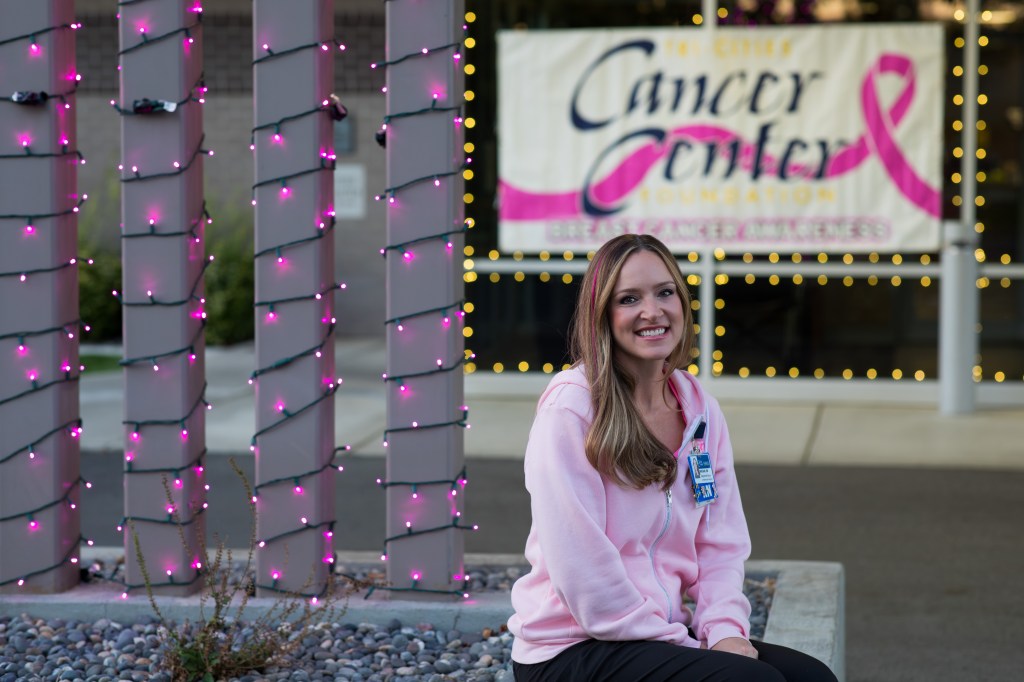
MEGAN
My grandma was my absolute favorite person EVER! She lived five doors down from me, and I was there more often than I was home. She always made me fresh fruit roll-ups in her dehydrator, painted my nails, decorated cookies, let me put her bright pink rouge on my cheeks, played cards with me- so many wonderful memories with her.
She was diagnosed with breast and ovarian cancer, and it was basically everywhere. She had everything removed that she could: breasts, colon, ovaries, uterus, surrounding lymph nodes, etc. It still wasn’t enough. She wasn’t expected to live very long.
Then she was asked to be on a clinical trial of a drug called paclitaxel. My mom and I would take her to Spokane and she would get it infused over 10-12 hours. And the days following would leave her violently ill. But time and time again, she would go to Spokane to receive her infusion. Every time she would tell me, “I’m doing this to help you someday.” Always telling me it was OK during her awful days because it would help my generation learn so much more about the chemo, its benefits, and how to make it easier to tolerate.
The treatment, although not easy on her AT ALL, gave her many more days to be with us, and there WERE good days: Beach trips, Halloween parties (I still cherish my cute grandma dressed in all green, with a cardboard yellow daisy and her face coming out the center of it! She’s still my favorite yellow daisy.), and holidays spent eating grandma’s famous turkey and giblet gravy.
Fast forward about 18 years, there I was, seeing the pathology report that confirmed that I had breast cancer. I had just turned 31. When I met with my oncologist, he told me the plan. I was to receive chemo consisting of docetaxel and cytoxan. He gave me my literature and I took it home to read up on the chemo drugs. To my surprise, paclitaxel (my grandma’s drug) and docetaxel (my drug) are made from the same tree. Paclitaxel is made from the bark of the Yew tree, and docetaxel is made from the needles of the Yew tree.
I instantly burst into tears as I realized my grandma’s words “I’m doing this to help you someday” were true. Tears of gratitude, love, fear, all the above. She always said it meant to help my generation, but it ended up helping me directly, as well as millions of others. It made me think back to her, and all the times she assured me her rough days were worth it to help ease the journey for generations to come.
I was very scared coming into my first infusion, as I had the images of her bad days and all the horrible vomiting she had to endure. But then the nurse started explaining to me about all the pre meds that would help with nausea/vomiting, reactions, etc. “It’s not like back in the day when people got very sick. We have much better pre meds to help alleviate the symptoms,” she said. “The clinical trials helped researchers come up with much better ways to help with the symptoms.” Did you hear that, grandma?! It really had come full circle. I received my chemo, took my nausea meds as instructed, and made it through my treatments with much more ease than my grandma had.
Fast forward another year, my mom (grandma’s daughter) was diagnosed with breast and ovarian cancer at the same time. She also received paclitaxel (the same drug as my grandma). Her breast cancer has been cured and she was a year and a half cancer free before the ovarian cancer came back. She again had chemo and is on daily oral chemo pills now, but doing so good four years later.
I know my grandma is looking down on us every day, and I send up little thank you’s all the time. She was so brave to endure that trial and look at how giant her impact has been! For me, my mom, and millions others. It is still a widely used drug.
In my grandma’s honor to help others in the world of oncology, I became an oncology nurse. Everything has come full circle: Grandma on a clinical trial which was the same drug that both me and my mom had, and now I am giving it to so many others as their nurse.
Grandma, I love you so much forever and always. Thank you for being so brave and somebody I have always aspired to be like.

Sha
“Denial keeps us blind to the things we don’t want to see because our minds don’t feel we’re ready to handle them.” – Ken Seeley
Denial was often a world I chose to live in. Denial was thinking the lump in my breast was not cancer, even though deep down in my gut I knew what it was. Denial was my hope that one day I would be and feel “normal” again.
August 2, 2022 is a day I will never forget. It was the day I found out I did indeed have breast cancer. I had three tumors in my right breast and one in my left breast. I denied my feelings. I refused to admit the truth. Cancer wanted to take over. I thought, “Holy cow, my boobs are literally trying to kill me! They betrayed me!”
Only two months prior, I had given birth to my stillborn daughter. She was perfect and I believe she was sent to warn me of this horrible disease before she went back home to heaven. She was literally too beautiful for this earth. A month after losing her, I found a lump. I felt like my world was falling apart. My mind thought bad thoughts. I didn’t want to live anymore.
I wanted time to slow down, all the doctor calls, all the bad news, all the scans and ultrasounds. It all happened so fast. It felt like someone had thrown a sheet over my head and I was struggling to get it off. It was a heavy and dark time.
21 days after my initial multiple tumor diagnosis, I asked my surgeon to perform a double mastectomy instead of several lumpectomies. I didn’t want my breasts anymore. Instead of having immediate reconstruction, I chose to stay flat for ten months before opting to have reconstruction surgery. I just felt like I needed to catch up with life and get myself out under this sheet.
I sat and wondered if it was stupid to miss my boobs. Can I grieve having double Ds? Absolutely. Reconstruction for me was a game changer, both physically and mentally. I started to feel more normal again. I felt like a whole new woman.
After recovering from surgery, I decided to reach out to support groups, my friends, and family and realized that the one thing that cancer has taught me is that love conquers all. Love is the grace that transcends any kind of injustice in the end when things are tough, blurry, and heavy. Love and faith from others will see us through to get that dark sheet off and for it to stay off.
My hope for the future is to learn to love my new body and take care of it, to know that the scars I have are fighter scars. If you are newly diagnosed or fighting or surviving, my only advice to you is to always advocate for yourself. I cannot express this enough. Don’t fall prey to, “Oh you are too young to have cancer.” Don’t stay quiet or isolated. If you are alone or scared or whatever you are feeling, don’t be afraid to talk to someone. Talk to a neighbor, your cat or dog, or better yet a stranger because we are all friends that haven’t met yet. Much love.
 madisonhatescancer