Fast facts (if you don’t have time to read the full post): It is October and I am currently trying not to actively suffocate in all of the pink. My feed is flooded with things I already have to think about 24/7, except now everyone else is thinking about them too for 31 days out of the year.
But October is also Halloween, a joyful time in my life, except it is now being eclipsed by the terrible news I have to share again for the second time in my life: I have cancer. The cancer is back. And it is October, so naturally I have extra feelings.
And I only ended up making one costume for Halloween, which is honestly probably the worst news for you to hear from me (sarcasm).
Before advancing forward, I have to share some trigger warnings today. I will be discussing infertility and death. Take care of yourself, dear reader.
Days until hysterectomy (sorry for the early spoiler): 25 days
TO THE REALLY LONG FUCKING VERSION!
To be clear, the cancer never really went away. My scans just showed no evidence of active disease (NEAD). Cancer is weird like that. Cancer plays hide-and-seek and is very good at holding its breath.
Me? I am not so good at that anymore. I know this because every time I am pushed through the little CT scan tube and told to hold my breath, I feel like I am suffocating from the weight of this disease. I am reminded how little control I have over it, even when I do everything right.
You have probably seen a lot of things in October about breast health. You have been advised over and over again to do self exams and seek out a mammogram, to exercise, to eat really, really well, to not drink, to avoid sugar because “it feeds cancer.” You probably have been asked to buy too many things adorned with pink ribbons (which might be the biggest crime).
I am not telling you that you shouldn’t do any of those things. Taking care of your body is good and exercise is good. Mammograms are unpleasant squish machines and sometimes hard to have access to, but are worth it if you qualify or can get a provider to order you one. Eating food that makes you feel good is good. I’ve heard broccoli has superpowers! And there are organizations and companies that responsibly donate money from the pink things you purchase if you take the time to research them and stay curious in your effort to support legit organizations.
But what I will tell you is this: Sometimes you can do everything right and it doesn’t fucking matter and it isn’t your fault.
Please read that again. Hear me when I say it is not your fault if you get breast cancer. Period. (This sentence might actually be more for me than for you today.)
When I was diagnosed in 2022, I gave in to functioning to survive. I was still a COVID long hauler (remember how fun that was for me for like a year and a half when everything tasted like acid, metal, and cleaners?!) so my diet was basically oatmeal, scrambled eggs, and apples when I started treatment.
The best advice I got during treatment was to just eat whatever I could because chemo has a way of destroying food as a source of enjoyment. I was fortunately one of the “lucky” ones whose taste and smell didn’t change during treatment. Instead, chemo actually helped resolve a lot of my COVID parosmia for some reason. It was like a reverse Uno situation, or life was like, “Hey, this bitch has had enough. Let’s at least let her enjoy beef again.”
Food was still challenging during active treatment. Sometimes I just didn’t want to eat. But I ate what I wanted and what I could, and I felt good about that.
I exercised when I could, for however long my body could handle it. I lifted small weights. I hiked Badger Mountain a couple of times and went on long walks down my street. By the end of chemo, I could barely lift a 5-pound dumbbell. My body was tired. Chemo is incredibly humbling in that way.
After active treatment and my mastectomy, I made a commitment to myself to get back into the gym. I had a Gold’s Gym membership and got back into BodyPump for a while. I have always enjoyed lifting weights, but exercising after treatment was different. My body wasn’t the same, and for the first time, I was having a hard time figuring out how to do it on my own. I knew I needed more support and encouragement than I had before cancer.
Fast-forward to November 2023, when I finally caved after my friend would not stop asking me to try CrossFit. That first session changed my life.
I was instantly fascinated by a sport I had spent years assuming had absolutely no space for someone like me. Almost three years later, CrossFit has become one of the best things that has happened to me. I found a beautiful way to develop strength in a completely different way (and feel kind of badass while doing it!) but more importantly, I found a community of people I desperately needed in my life.
I was fortunate enough to afford my first year of CrossFit through a grant I found for breast cancer survivors that supported patients who wanted to participate in CrossFit and nutrition counseling. The CrossFit part changed my life. The nutrition counseling? Not so much.
I could feel myself starting to develop a challenging relationship with food again. I was told potatoes were bad and that I should basically live on vegetables and chicken breast. Instead of making me feel healthier, it left me feeling restricted, confused, and somehow even more lost while I was trying to figure out what it meant to thrive after a breast cancer diagnosis.
Then Petar, one of the coaches at my CrossFit gym at the time, told me he was offering nutrition coaching. I was hesitant. I had just spent months being made to feel like a potato was somehow my mortal enemy. I wasn’t ready to get hurt again by someone’s lack of education about the beauty of potatoes. But I loved Petar as a coach, trusted him, and decided I could give nutrition coaching one more try.
We worked together for about eight months, and it was some of the best coaching I have ever received (and he also loves potatoes.) He wanted to understand me. He wanted to learn about the disease in my body, what I had been through, what medications I was taking, what I wanted from training, and what my life actually looked like in relation to food, exercise, and sleep. There was no pretending my body existed separately from everything it had survived. And it was incredibly transformative to have someone in my life who saw me as a whole person—not just a patient, not just an athlete, not just someone trying to lose weight or gain muscle, but a person trying to learn how to live inside this body again.
Our nutrition coaching ended in October 2024, but what I learned during those eight months never really left me. It changed the way I thought about food, but more importantly, it changed the way I thought about taking care of my body.
By the end of 2024, I had settled into something that felt sustainable. I meal prep probably 85% of what I eat, I eat mostly whole foods, and I eat vegetables willingly, which frankly feels like personal growth. I pay attention to protein and my water intake. I go to CrossFit to lift heavy things for fun with my friends. I also give myself permission to enjoy a beer and gimlet and late night fries with fry sauce at the Parkade because life is for the living. Ultimately, I wasn’t doing any of this because I thought I could outsmart cancer, or at least I don’t think I was. I was just doing it because it felt really good and it was the one thing I could try to control.
But there is something really sneaky about wellness and cancer. We are constantly told that the things we do can reduce our risk: exercise, eat well, maintain a healthy weight, sleep a lot, reduce your stress, take your meds, see your doctors, and pay attention to anything off in your body. All of those things can be good advice. The problem is that somewhere along the way, “these things may reduce your risk” can start sounding a lot like “if you do these things, you will be safe.”
And if doing everything “right” means you are safe, what does it mean when the cancer comes back? That question is heavier than I realized because when something started feeling wrong in my body this summer, I didn’t just have to contend with the fear that something might actually be wrong. There was another voice in there, too, haunting me and asking me if I was doing enough. Because unfortunately, the cancer came back.
But I am getting ahead of myself.
On Aug. 30, I ended my last blog post with a question I couldn’t answer: How many times can you say, “Something is wrong with me, this is not normal for me,” when every test meant to prove it keeps coming back saying you’re fine, except for Signatera (foreshadowing much?) It has been a little over a month since I wrote that and something is very wrong with me.
I now constantly operate in some sort of pain all the time. My fatigue and sleep has gotten a bit better since my wrong hole incident, but I still feel wiped out at the end of the day. Finishing a workout feels like somebody has unplugged me from the wall and I lost a bit of my strength this summer. Sometimes ordinary things like walking around Costco for an hour leave me feeling like I did way too much. Working an 8 hour day is rough, especially when I attempt to exercise in the morning or go to multiple medical appointments in the same day. The strong, energetic girl from July 3 has nearly been erased. I cannot believe that there is another pinpoint date in my calendar of when my life completely changed forever again.
I have continued to tell my providers that something is wrong and in response I got a request for additional blood work (thyroid, vitamin, a lipid panel), a referral to cardiology, an echocardiogram, and a Holter monitor to appease me, but overall it has felt like my team has basically taken a step back due to the lack of evidence for something wrong in my scans and the fact that I have general anxiety disorder listed on my long list of things I have been diagnosed with.
Almost everything looked fucking fantastic. My echo came back and it appears I have a nice, decently healthy heart given the shit it has been through. Despite the violent chest pains and squeezes, my week adventure wearing a Holter monitor showed nothing interesting about my heart. As for my bloodwork, most of it in September looked absolutely beautiful despite me feeling like absolute garbage.
However, there was one unexpected surprise: my cholesterol was high. I’ve never had a fucking lipid panel in my life. Isn’t that weird? I also was wildly uneducated about the fact that I should have asked for that panel a long time ago (or been offered as ER+ breast cancer patients run a higher risk for cardiovascular issues due to the lack of estrogen), but I digress.
I understand that cholesterol is complicated. Genetics, hormones (or lack of mine), the medications I’m on, the fact that I was medically drop-kicked into menopause, and maybe my intimate relationship with every cheese I meet could be contributing. But not long after my results appeared in MyChart, my primary sends me a message saying everything looks good except I had a high blood pressure reading at the ER, my cholesterol is high, I need to go on high blood pressure medication ASAP, and should consider eating better and exercising.
I wish you could have heard the maniacal laugh that escaped me when I read that message.
I know a lipid panel and a one-off reading at the ER when my PORT WAS IN THE WRONG HOLE is not a report card on whether I have been a “good healthy person,” but I would be lying if I didn’t disclose to you all that I wanted to go scorched earth in that moment. I have never felt so unseen in a medical message. I was livid. LIV-ID.
That is when I realized how easily health becomes morality, how quickly numbers become grades, how our medical staff are so fatigued and overwhelmed that my primary didn’t take the time to read my chart to see I consistently have low blood pressure and every fucking conversation I have with a provider about exercise, I sprinkle in how heavy I can deadlift because I am proud, I want to demonstrate that I do exercise, and I want them to know that I do all of these things and it DOESN’T SEEM TO MATTER.
I had convinced myself the last couple of years NEAD that if my labs are good, I’ve been good. If my body is strong, I’ve been good. If I eat my veggies and take my meds and do all the things, I somehow will earn protection from bad things happening to me. Because this is also how my providers have approached me: you do these things, you will be fine.
As I continued to have an emotional meltdown about a stupid lipid panel and the fact my primary was trying to put me on a med before even asking me lifestyle questions (or checking in with me OR even thinking “Huh this chick lacks estrogen, I wonder if that is a factor?”), another blood test was making its way through the labs: Signatera, my tumor marker test.
If you remember during the shit storm of July, my Signatera test came back at a below detectable level of .36. Panic ensued but my onco was not worried and said we wait for a trend and see what happens next month. Waiting is every cancer patient’s least favorite hobby, but once I moved past the shock and continued to experience the rest of August and half of September, a part of me deep in my bones already knew the Signatera was going to tell me something I desperately did not want to hear.
On September 30, as I left my physical therapy appointment and made my way to the hospital for an echocardiogram, an email notification entered my box even before MyChart. My results were in and I instantly knew my fate. I opened my little graph to see the the line skyrocket up with the number 5.03. I sighed in only a way that a millennial who has dealt with too much in this lifetime could, trying not to lose my cool and let the tears of the unknown escape me in the waiting room as I waited for my next appointment.
I have cancer. Again.
I have prepared us over the years over and over again in every blog post about how distressing this test is but how it could save my life and just because I am NEAD, does not mean I get to be the one that avoids cancer forever because I am ~so cool and special.~ We know the statistics and we know the odds and I am just like every other stage IV patient, hoping and willing science and technology to outrun this disease. This test gives me the best chance at starting a new line of treatment and may it push me back into NEAD, but the real question is where the fuck is the cancer?
Seriously. Where the fuck is it?
I have been scanned too many times in a small amount of time. I have had blood work done over and over again. I have had ultrasounds. I have had a brain MRI. I have had enough contrast injected into my veins this summer that I should probably start glowing in the dark. And yet, cancer?
But everything that has followed has been harder than I could ever imagine.
I’ve become a master of dissociation. There have been so many moments over the last month when I’ve felt like I’ve stepped outside myself, watching as I deliver devastating news to the people I love most: I have cancer again and that’s all I can tell them.
I don’t know where it is, how bad it is, hell I don’t even know what happens next. I know nothing except that life is once again filling my pockets with rocks, and I’m walking straight into the depths of cancer, plunging straight to the bottom, unsure whether I’ll find my way back to the surface.
Now, you’re probably thinking, “Wow, this chick is being hella dramatic.” I mean, maybe? I am, after all, a writer for entertainment purposes. Do you not laugh at my misfortune sometimes? I write it so we can laugh in solidarity together. This is all so fucked up, so sometimes we have to laugh about how fucky it is. But the week following my results only got progressively more absurd.
I figured I wouldn’t hear from my oncologist between receiving my results on Wednesday, Sept. 30 and seeing her the following Tuesday, Oct. 6. She’s not exactly the kind of doctor who calls to check whether I’m emotionally floundering or to acknowledge she saw something come through that was going to flip my life upside down. I like to think she is just incredibly busy? Who’s to say?
Surprise, surprise. I didn’t hear from her.
So I spent the next several days trying to figure out how to tell people I had cancer without actually knowing anything about the cancer I was telling them about, a truly delightful conversational experience, by the way. People had questions. Reasonable questions! Where is it? What happens next? What did your scans show?
I had absolutely nothing to offer them, so then I kind of stopped telling people beyond the people in the “need to know in case of a severe emergency” circle until I had more info, thus why this blog post has been so delayed. I will say, telling people you have cancer for the second time is just as devastating as the first, except this time, it felt like having to announce a disaster before anyone could tell me what had been destroyed. (I also recognize I do not have to tell people, but you all know I tell the internet all of my secrets. Well, almost.)
October 6 has now become one of those dates etched into my personal history. Like a battle in a war, the kind you read about years later where one particular day, one particular encounter, changes the course of everything. Except this wasn’t history. It was me and a friend walking into my oncologist’s office, completely unaware of how badly the next hour was going to go for me.
We arrived early and got called back right on time to the tiny little room. As we waited her arrival, the medical assistants took my vitals (no high blood pressure, take that primary doctor muahahahaha!), tolerated my humor, and provided hugs knowing that things were about to get wild in that room. As they left, my friend and I were left to our own devices.
My friend admired the collection of degrees hanging on the wall in a truly terrible salon-style arrangement. Meanwhile, I sat there thinking about how many times my life had changed inside those four walls.
It’s funny how much history a tiny-ass medical exam room can hold. Those walls know the secrets of so many patients. They carry the weight of our grief. You can almost feel it in the pale paint, the sterile furniture, the complete absence of anything remotely inspiring. Nothing about that room suggests good news has ever been delivered there.
Then my oncologist walked in.
She started with the usual pleasantries. How have I been? Lady. You’ve seen my chart. You know how I’ve been. You know why I’m here. Can we skip the bullshit? And then she did something I can’t stop thinking about: she crossed her arms and leaned back against the medical shelving, almost as if she needed to put as much distance between us as the room would allow before delivering blow after blow of terrible information. It felt like a scene from a really bad movie.
“I hoped your Signatera was a false positive in July, but it’s not. The cancer is back,” she said in her clipped manner.
A pause.
I could feel myself losing my grip on whatever emotional composure I’d managed to bring into the room. Tears started falling before I could do much about them. It’s one thing to stare at a graph on your phone and dissociate from what it means. It’s another thing entirely to have your oncologist look you in the face and tell you that you have cancer. Again.
“You know what this means,” she said matter-of-factly.
Now, this is where things get really funny because I thought I did know what it meant. I’d prepared for this scenario. I figured she’d offer Kisqali or put me back on Lynparza. I’d already rehearsed my response: Yes, give me Kisqali. The harder drug! Let’s do this.
So, with all the confidence of someone who had apparently studied for the wrong exam, I said:
“Back to oral chemo!”
She shook her head.
I was confused.
Another pause.
“We’ve had this conversation before. I told you that you had to do this. You need to remove your ovaries.”
And just like that, the movie stopped being funny. The humor disappeared. The predictability disappeared. My brain flooded with tears and confusion and the sudden realization that I had walked into this appointment prepared to discuss medication, not the permanent removal of another part of my body. This was not one of the options I had rehearsed. And even my friend was looking at me confused because I did not prepare her to witness this conversation either.
This is where the play-by-play ends. I don’t remember the exact words exchanged after that. I remember pieces and feelings. The general conclusion of a conversation my brain was desperately trying to process while the rest of me was falling apart.
To understand why this hit me so hard, we have to go back to 2022. When I was first diagnosed, fertility preservation was briefly offered as an option. At the time, we initially believed my cancer was triple-negative. But further testing showed it was hormone receptor-positive, meaning estrogen could help fuel its growth. Freezing my eggs would have required ovarian stimulation with hormones, and my medical team considered that too risky given my diagnosis, so that option disappeared almost as quickly as it had appeared.
Instead, we moved forward with ovarian suppression, hoping chemotherapy wouldn’t permanently damage my ovaries. I’ve been living in a medically induced menopausal state ever since, enjoying all the absolutely delightful things that come with menopause. The possibility of future family planning was never entirely erased from the conversation, at least not in my mind. My second-opinion oncologist at Fred Hutch had left it as a maybe someday kind of possibility.
But somewhere around 2023 or 2024, my local oncologist began pushing for permanent ovary removal and she hasn’t exactly let up since.
In essence, the rest of the appointment can be summed up like this: If I wanted the best chance at survival, I needed to have a total hysterectomy within the next month.
She wouldn’t order any additional scans because I’d already had too many this summer. We only get so much lifetime radiation, she explained. Never mind that something could have changed since my last scan, or that a lesion (or lesions) might now be visible where there wasn’t one before…
If my next Signatera result comes back even higher, the plan is to put me back on Lynparza, not Kisqali. Apparently, I’d already “failed” Verzenio, Kisqali’s cousin, and that is a whole other conversation I don’t have the emotional bandwidth to unpack in this blog post. But this also does not address that if cancer is existing in an estrogen-free space, that could be a an indicator that the receptor status has changed, but I am not a doctor so…
In essence: I have a blood test suggesting cancer activity somewhere in my body. We don’t know where. I need to permanently remove more organs. We aren’t doing any new imaging right now. And I get to wait for another test to tell us whether things are getting worse while I continue to vibe in a painful state.
Cool. Cool cool cool.
Oh, and my favorite part? She kept encouraging me to take antidepressants because, based on all my ER visits this summer, it was clear to her that I was anxious about cancer and struggling under the emotional burden of this disease.
Once again, I was LIVID. How many times do I have to fucking tell people—medical providers, people who love me, anyone who will listen—that I went to the ER this summer because I was in the WORST PAIN OF MY FUCKING LIFE? I wasn’t going to the ER because I was convinced cancer had returned or that I was rebelling against my oncologist’s lack of scanning surveillance.
For those first three CT scans, cancer wasn’t even what I thought we were looking for. At one point, I genuinely thought I had an ascending infection into my kidneys, the fuck? The CT scan showed that. Meanwhile, my scans showed no evidence of active disease. I wasn’t begging people to scan me for fun. I wasn’t collecting CT scans like Pokémon cards. I was in pain. I was scared because of how much pain I was in and I wanted somebody to help me figure out why. I JUST WANTED TO NOT BE IN PAIN ANYMORE. And I want to note, I was not worried about recurrence until my chest pain became part of the equation.
And now? Now I have a rising cancer-related blood test, and suddenly we’re not scanning? Do you understand how absolutely maddening that feels?
For three months, I have been trying to explain that something is wrong with my body. I’ve been poked, scanned, examined, reassured, redirected, and sent home. I’ve questioned my own judgment more times than I can count.
Now I’m sitting in the same room being told that my cancer is active again, that I need major surgery, and that perhaps I should consider medication for anxiety.
To be absolutely fucking clear, I’m not opposed to mental health care. I know what this disease does to people emotionally. I know what it has done to me. But I need someone to understand that being distressed about unexplained physical pain is not the same thing as that pain being caused by distress. Those are two very different things. After everything that has happened this summer, I am so fucking tired of having to explain the difference.
My oncologist left the room, and I sat there and cried my eyes out. I felt powerless.
We left the room with three objectives: a referral was sent to a gynecologic oncology surgeon for a consultation about removing my uterus and ovaries, I needed to receive my 50th and final Zoladex injection, and I had to head back to the lab for a CA-125 blood test.
CA-125 measures a protein in the blood that can be elevated in certain cancers, particularly ovarian, fallopian tube, and peritoneal cancers. But it’s an imperfect little bastard of a test. Elevated levels don’t necessarily mean cancer, and normal levels don’t rule it out. Other conditions, including endometriosis and inflammation, can also cause elevated results. It is also helpful if you get this test regularly, as trends are more important than one-off tests.
So, another test and another thing to wait for.
I wish I could have experienced the joy of knowing I would no longer be treated like a human Capri Sun after 50 Zoladex injections. Fifty! A beautifully round number that happened entirely by accident. Under different circumstances, I might have celebrated the occasion, but there was little comfort in this particular milestone.
It also meant I wouldn’t be seeing my nurses at the cancer center nearly as often anymore. The people who have cared for me, laughed with me, let me steal endless amounts of cheese, listened to me complain, and helped carry me through some of the worst years of my life, would be less frequent.
I no longer have a port. Soon, I won’t have ovaries to suppress. Without infusions or injections, there will be fewer reasons to walk through those familiar doors.
It’s strange to grieve something you’ve spent years wishing you didn’t need. I wanted to be done with the injections. I just didn’t want this to be the reason why.
Time for more waiting!
If cancer patients were paid for the amount of time we spend waiting, I could probably afford to retire by now. The days between Oct. 6 and Oct. 19 were filled with the usual assortment of appointments, phone calls, and medical uncertainty. I had some cardiology follow-ups and wore a Holter monitor, all with benign outcomes.
On Oct. 19, I traveled to Spokane to meet with a gynecologic oncology surgeon. I don’t think I’ve been that anxious about a consultation in a very long time, maybe because this didn’t feel like a surgery I was choosing? I thought my next surgery would be to improve my foobs, you know, something fun. Instead, it felt like a surgery I was being asked to choose if I wanted the best chance of staying alive. An illusion of choice, if you will.
The surgeon was wonderful. The very first thing she did was acknowledge how difficult this must be for me. She told me she was sorry I was having to make these decisions and I cannot tell you how much that meant.
It was the bare fucking minimum. A medical provider acknowledging that permanently removing organs, surrendering the possibility of biological motherhood, and facing the long-term consequences of surgical menopause might be a monumentally difficult decision. But after everything I’d experienced over the last few months, that little bit of humanity felt enormous.
We talked through my options: removing my ovaries or pursuing a full hysterectomy, what each surgery would involve, and the risks and changes that could follow. We discussed the potential long-term effects of losing my ovaries, including cardiovascular health, and the options available to help manage some of those changes.
She was reassuring about the medical side of things. There were ways to manage symptoms and mitigate certain risks, but she also acknowledged something that I found strangely comforting: she couldn’t fix the emotional weight of this decision. That part was mine to carry.
And maybe it was comforting because, for once, someone wasn’t trying to explain away how difficult this was. She wasn’t asking me to be brave or positive or grateful that I had options. She simply acknowledged that this was hard.
Throughout the appointment, she kept reminding me that the decision was mine. I could remove just my ovaries. I could pursue a hysterectomy. I could choose not to have surgery at all. It was my body, my decision. But there’s a cruel irony in being told you have a choice when every option comes with something you desperately don’t want to lose, because how much of a choice does it really feel like when you’re being asked to weigh pieces of your body against the possibility of more time?
I believe in science. I believe in medicine. I understand why removing my ovaries is being recommended given my hormone receptor-positive cancer and BRCA1 mutation. I know there are reasons my medical team believes this could improve my chances. But understanding the science doesn’t make the decision any less devastating.
I also told her I’d scheduled a second opinion with my oncologist at Fred Hutch for Wednesday, Oct. 28. She was completely supportive.
She acknowledged that breast cancer treatment isn’t her specialty and that decisions about systemic therapy ultimately belong with my breast oncologist. She also told me she knows and trusts my local oncologist, works with her often, and supports the recommendation for surgery.
I appreciated her honesty. She wasn’t pretending to have every answer, and she wasn’t offended that I wanted another opinion.
I met with the Fred Hutch oncologist last spring, so she’s already familiar with my case. I’m hoping to understand whether she agrees that surgery should be the next step or whether she’d recommend restarting systemic treatment first. Admittedly, there’s another conversation I’ve been considering: What would transferring my oncology care look like?
Seattle is a long way from home, especially in the winter and crossing the pass. Depending on treatment and follow-up requirements, it could mean traveling across the state monthly, possibly more. I don’t know what the transition would involve, how quickly it could happen, or whether it might interrupt my care at a time when I really can’t afford more delays. Those are questions for Wednesday.
But for now, back to Spokane.
I walked out of that consultation feeling something I hadn’t felt much of lately. Not necessarily hopeful, not relieved about the surgery itself, just… cared for.
We tentatively scheduled surgery for Nov. 19, with the understanding that I’d make my final decision after speaking with Fred Hutch. So, assuming everything moves forward as planned, that’s the day we’re going to yank everything out, a truly festive way to spend November and December. At this rate, I’m going to run out of organs before I run out of medical bills.
And now, I wait. Again. I wish I had some profound wisdom to offer at this point, but I don’t. I’m tired. I’m scared. I’m still in pain. And I’m trying to make decisions about a future I desperately want to be part of, without knowing what that future looks like. I hate to leave you on a cliff hanger, but you already know a follow up post is on its way, so hang tight. 😉
Palate cleanser! Life lately:
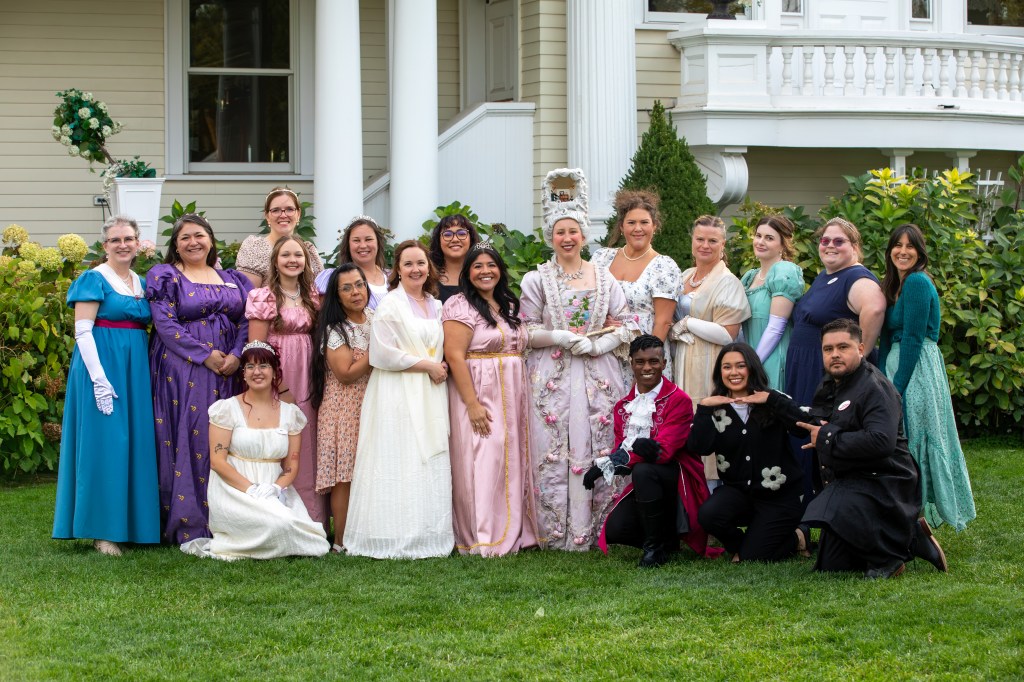
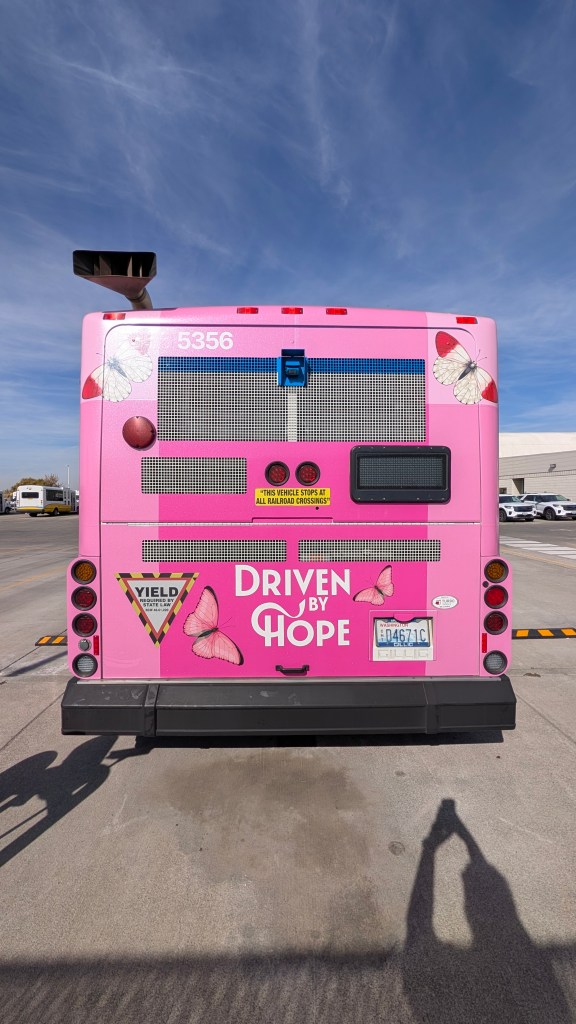
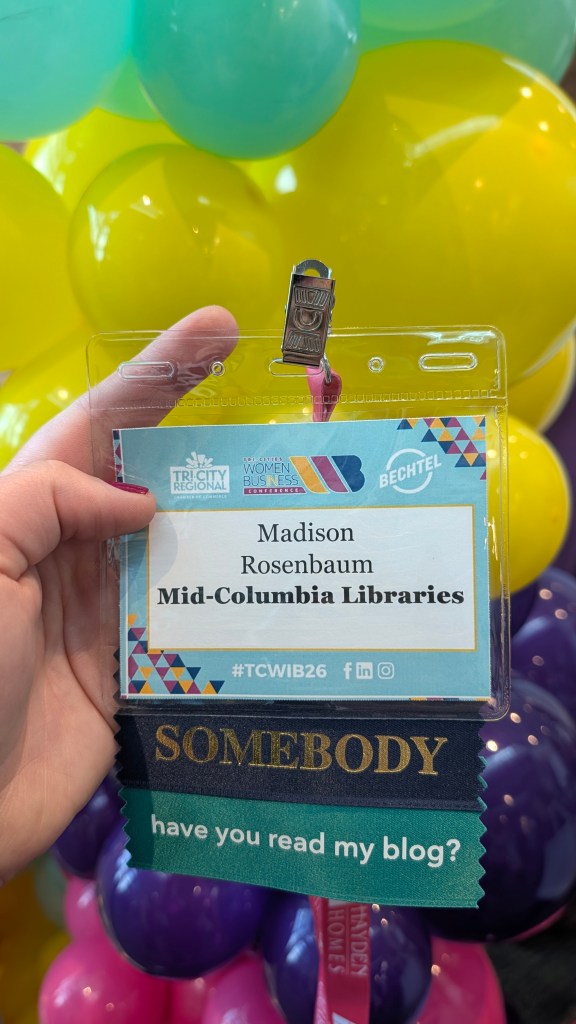
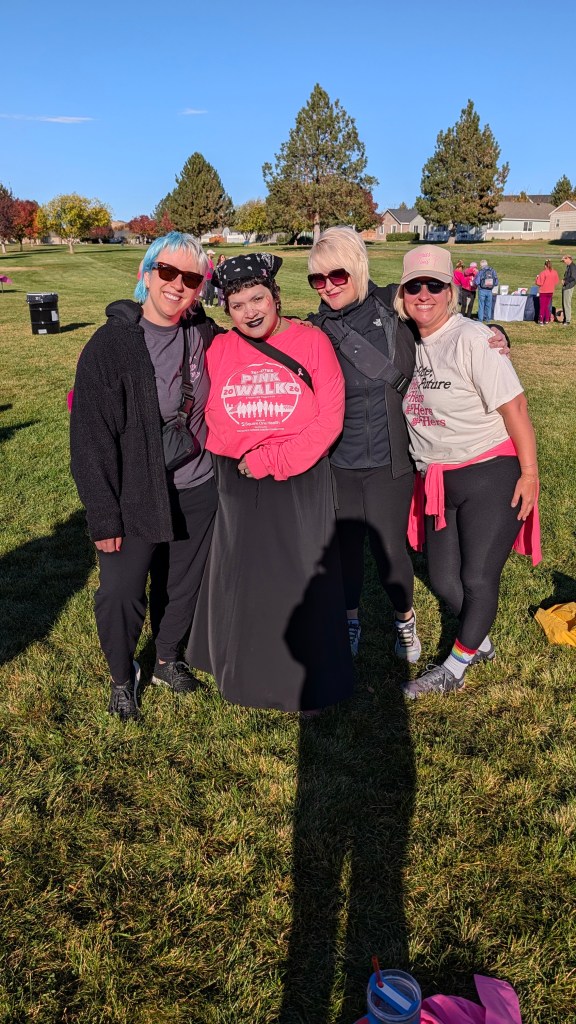
October has become a strange month to live inside. For 31 days, the world asks me to inhabit an identity I spend the other 11 months trying to figure out how to carry. Everything turns pink and everyone talks about breast cancer and suddenly the thing that lives in nearly every decision I make is everywhere I look. It is actually really fucking weird and incredibly hard to swallow because sometimes, being reminded of everything cancer has made me become also reminds me of everything it never let me be.
In another life, there’s a version of me who never got cancer. There’s a version who became a mother. A version who only went to the doctor for routine exams, never wondering whether an appointment might change the course of her life. A version who made plans for the future without wondering whether she’d be around to see them through. Versions of me attached to all those sentences that once began with, “Someday, when I grow up…”
Sometimes I want to tell the little girl who dreamed so big that I’m sorry, as though any of this was my fault. I imagine sitting with her, crying over the things I cannot bring myself to tell her. All the horrors I’ve learned and all the things she’ll never get to be.
And then I think about how some of those horrors will end with me. I will never pass down this genetic mutation. My sisters and other family members have been given knowledge and choices that I wish we’d all had sooner. Maybe that knowledge will help them avoid some of what I’ve endured.
I imagine my younger self reaching for me, wrapping her arms around me and staying awhile. Together, we mourn the versions of me we’ll never meet.
The disease I have is aggressive. My BRCA1 mutation is part of the story of how I got here. We cannot pretend on this blog that I will avoid death because I write pretty words and make cool costumes. I need you all to see me say these things about myself because I don’t want to carry them alone where I am headed next: I am not afraid to die, but I love this life. Despite the pain and the anguish, the appointments, the decisions I have to make that slowly strip away my future dreams and hopes for myself, I still love this life and I will continue to find joy where I can.
But the reality is that this disease may very well kill me long before any of us think it should. It is not fair, and I don’t disagree. Yes, I have treatment options ahead of me, so I’m not out for the count yet. But I need you to hear me say this, too: cancer has asked me to start over so many times. Every time I begin to settle into the person I’ve worked so hard to become, it returns and asks me to become someone else, to negotiate away another piece of myself.
And the negotiations are getting harder and more complicated. I’m offering more precious commodities now: my organs, my long-term health that comes with heavier consequences, my sense of self, my future.
And the worst fucking part? I have no idea what’s on the other side of the bargain. I keep coming to the table with more of myself to offer, and cancer has never once promised me anything in return.
Maybe that’s what makes October so strange. Cancer keeps asking me to become someone I never chose to be, while Halloween gives me the freedom to become anyone I want. For one night, I get to step outside of myself. It is a small reprieve from the world I live in, where beauty, imagination, and creativity collide. It is where I am happiest, where I get to share my joy with others, and where being someone else feels like coming home to myself.
And then I take off the costume and become myself again.
I don’t know who the next version of me will be. I just hope she gets to stay awhile.
Today’s song lyrics of the day are brought to you by Eminem.
“Guess who’s back
Back again
Shady’s back
Tell a friend
Guess who’s back, guess who’s back, guess who’s back, guess who’s back
guess who’s back, guess who’s back, guess who’s back”

